
Brother Outsider: The Life of Bayard Rustin

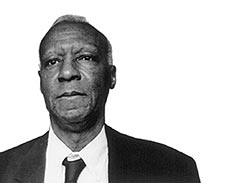
On November 20, 2013, Bayard Rustin was posthumously awarded the prestigious Presidential Medal of Freedom by President Barack Obama. Who was this man? He was there at most of the important events of the Civil Rights Movement - but always in the background. Brother Outsider: The Life of Bayard Rustin asks "Why?" It presents a vivid drama, intermingling the personal and the political, about one of the most enigmatic figures in 20th-century American history. One of the first "freedom riders," an adviser to Dr. Martin Luther King, Jr. and A. Philip Randolph, organizer of the March on Washington, intelligent, gregarious and charismatic, Bayard Rustin was denied his place in the limelight for one reason - he was gay.
Rustin was born in 1912 into a Pennsylvania Quaker family steeped in ideas of social justice and non-violence. He moved to Harlem during the socially and culturally tumultuous 1930s and, after a brief flirtation with the Communist Party found a more congenial home in A.J. Muste's pacifist Fellowship of Reconciliation. While there, he served prison terms for resisting the draft during World War II and later for integrating interstate buses. When A. Philip Randolph, aging head of the Black labor movement, turned to the fellowship for tactical help, Rustin worked closely with him and developed a belief that the labor movement offered the best hope for Black advancement.
Then in 1953, Rustin was arrested during a casual homosexual encounter. A.J. Muste forced him out of the fellowship. When the Montgomery bus boycott was launched, he went to Alabama in 1956 and became a mentor in non-violence to the 26-year-old Dr. Martin Luther King, Jr. Though Rustin would advise the younger civil rights leader until his assassination in 1968, King broke publicly with Rustin in 1960, when Representative Adam Clayton Powell threatened King over the issue of Rustin's homosexuality.
But when the 1963 march on Washington was proposed, the civil rights leadership recognized there was only one man who could organize it - Bayard Rustin. After the march's overwhelming success Rustin forged the fragile alliance between the labor unions, the Civil Rights Movement and the Democratic Party which was responsible for much of the landmark civil rights legislation of the 1960's.
Later on, Rustin angered former colleagues by not speaking out against the war in Vietnam, and by taking controversial stands against Black Nationalism and affirmative action. In the 1970s and 1980s, he returned to his early interest in international affairs and human rights, working on behalf of refugees around the world. Brother Outsider: The Life of Bayard Rustin contributes a fascinating new chapter to our understanding of both progressive movements and gay life in 20th-century America.
Produced in associated with the Independent Television Service (ITVS)
For more information on Bayard Rustin visit:
"Brother Outsider illuminates as never before Rustin’s fascinating public career and his equally intriguing private life. It is a film worthy of his valuable legacy."
Clayborne Carson, Stanford University, Director, Martin Luther King Papers Project
"An utterly wonderful documentary. The viewer will be focused and totally absorbed by one of the most fascinating characters of the so-called American Century. First-class documentary filmmaking all the way down. An amazing and wonderful piece of work."
Kenneth O’Reilly, University of Alaska
"Brother Outsider makes a groundbreaking contribution to understanding how the politics of sexuality and gender shaped the Black Civil Rights Movement. It is a fascinating portrait of a remarkable human being."
Barbara Smith, Independent Scholar and Author
"In the struggle for African American dignity, he was perhaps the most critical figure that many people have never heard of. It's worth taking a look at the life and lessons of one Bayard Rustin."
Time
"A worthy tribute and a powerful retelling of the civil-rights story, which gains a new freshness seen through the medium of this one special man."
Wall Street Journal
"For young folks who take their freedoms for granted, the entire documentary is an important reminder that some people fought hard and put their lives on the line to attain those freedoms."
Philadelphia Inquirer
"It's an impressive gathering of facts and interviews about the man who was also openly gay at a time when even many liberals, including his fellow civil-rights activists, were homophobic."
Boston Globe
"Like Rustin, the film is alive with ideas, fast-paced and surprising, and rich in humanity. It’s beautiful like him--and it’s got rhythm."
Africana.com
"I highly recommend this film for high schools, academic, and adult public library collections."
Monique Threatt, Indiana University, Bloomington, EMRO
Brother Outsider: The Life of Bayard Rustin

Ways to Watch
Educational Streaming
Colleges, Universities, Government Agencies, Hospitals and Corporations.
Community Screening
Short-term use for small groups, organizations, or high school classes (under 100 participants, where no admission is charged).
Home Viewing
48-hour, personal rental for in-home use only, restrictions apply