
July '64

The night of Friday, July 24th, 1964 started off normally enough in Rochester New York, stiflingly hot and humid; but by the next morning no one would look at race relations in the North the same again. July ‘64 takes a penetrating look at the underlying causes of the riots or urban insurrections that swept through Black communities like wildfires that summer and in years since.
To many whites it must have seemed odd that it started in Rochester. To them Rochester was the ideal small city; it had low unemployment and thousands of high paying, skilled manufacturing jobs in ‘clean’ companies like Kodak, Bausch and Lomb and the future Xerox. But this characteristic also led to Rochester being referred to as ‘smugtown.’ Black people emigrated from the South looking for these jobs only to be bitterly disappointed to find that the only positions open to them were as janitors and service personnel not skilled technicians. They were confined to ghettos of rundown, rat-ridden housing; Rochester was the last large city in New York State to build any public housing. Police brutality was a constant aggravation. Rochester’s Black neighborhood was a keg of dynamite waiting for a match.
It came that night with the arrest of a drunken Black man at a block party - or perhaps it was the rumor that a young Black girl had been bitten by a police dog. The streets filled with young people throwing bricks, stones and Molotov cocktails at the police and trashing stores along Joseph Avenue, the main artery of the Black neighborhood. The film interviews several participants after 40 years and while they express sadness at having hurt store owners with whom they had had friendly relations none of them felt regret at giving vent to their frustration about the situation in Rochester. These are the real life emotions dramatized in Spike Lee’s Do the Right Thing.
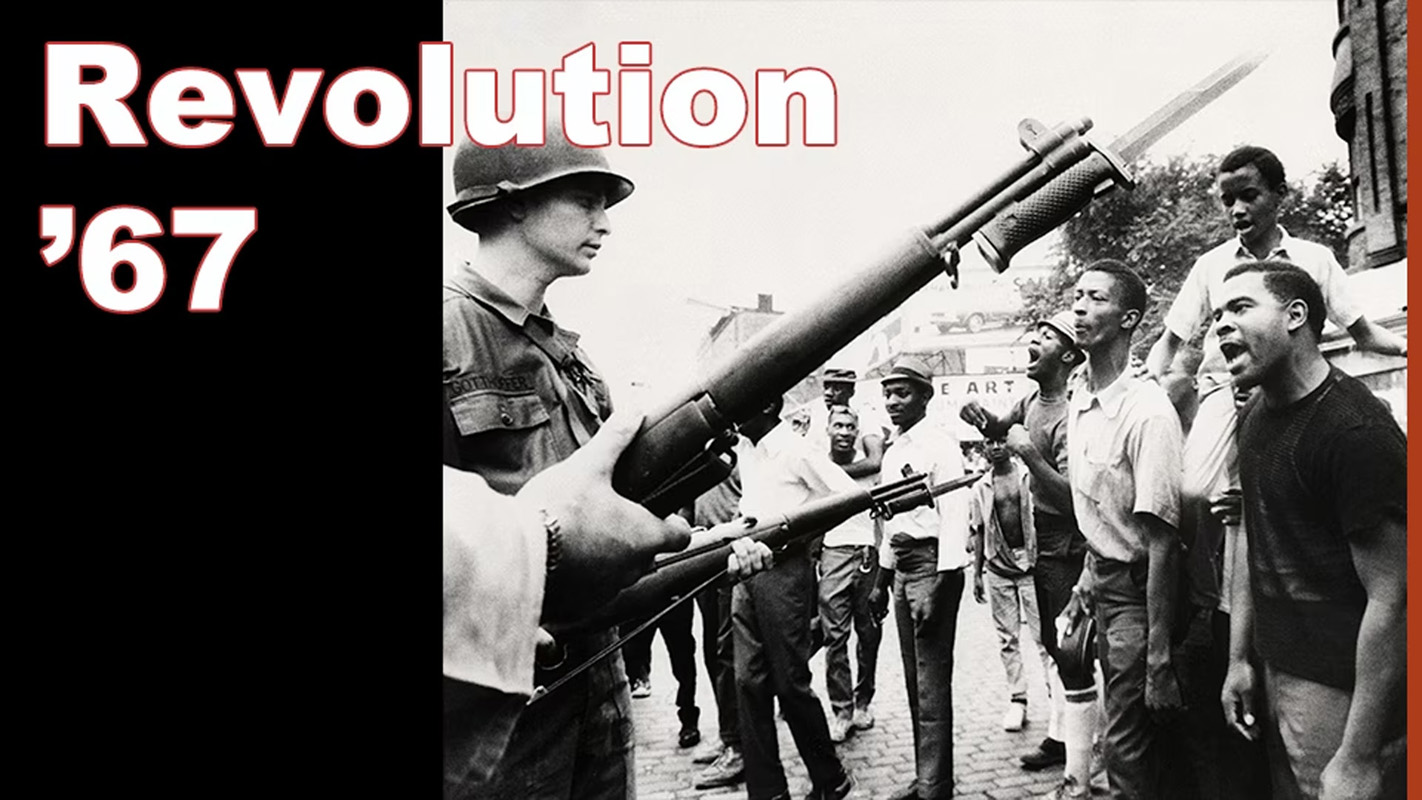
With a second night of urban disturbances a state of emergency was declared, and Gov. Nelson Rockefeller sent 450 National Guard troops into Rochester. This was the first time the National Guard had been used in a Civil Rights struggle in the North. Over 1000 Black people mostly between the ages of 20 and 40 and mostly employed were arrested that weekend. The ultimate causes of the uprising, according to Rochester’s present Black mayor, were health, education and jobs.
These problems persisted into the film’s release in 2006, and in many cases intensified rather than abated in the 40 intervening years. At the time, only 25% of Black pupils graduated from Rochester’s high schools. James Turner, Professor at Cornell University, refers to cities like Rochester as demonstrating the "crisis of the Black politician." Once Black people win political power, whites move out of a city to the suburbs or the Sunbelt, and industry runs away or goes overseas, taking the tax base with them. Forty years after the 1964 riots, Rochester had become a shadow of the prosperous industrial city it once was.
Langston Hughes famously wrote, “What happens to a dream deferred? Does it dry up like a raisin in the sun? Or does it fester like a sore and then run? Maybe it just sags like a heavy load. Or does it explode?” Rochester was only the first instance of the burning inner city, an ember which has flared up in cities like Miami and Los Angeles ever since. It is not a question of whether it will happen again, simply what incident will trigger the next conflagration, spark the next urban combustion. These are cries of inchoate rage and frustration because the country has yet to develop the concrete policies to address the vital needs of its Black citizens: health, education, and jobs. July ‘64 can further these discussions in Black Studies, Urban Studies, American History, Social Problems and Sociology classes, as well as in community groups, so that more Rochesters will not be necessary.
What happens to a dream deferred?
Does it dry up
like a raisin in the sun?
Or fester like a sore--
And then run?
Does it stink like rotten meat?
Or crust and sugar over--
like a syrupy sweet?
Maybe it just sags
like a heavy load.
Or does it explode?
by Langston Hughes
July ‘64 is a production of ImageWordSound, presented by Independent Television Service (ITVS), National Black Programming Consortium (NBPC) and WXXI with funding provided by the Corporation for Public Broadcasting.
Images courtesy of the City of Rochester Rare Books and Special Collections, University of Rochester library and the Democrat and Chronicle.
"JULY '64 presents, with remarkable images and striking words from the people who were there, a dramatic moment in the history of Rochester. This was the home of Frederick Douglass, the great abolitionist, so it is ironic and yet fitting that the realities of racial discrimination and economic injustice in all of America should be revealed in one violent summer, in one city. "
Howard Zinn
"Those who made this film deserve ample credit for portraying such complexities with honesty and grace...I enthusiastically recommend this film to sociologists, political scientists, historians and those in professional fields dealing with social justice and problems of the cities. Students, in particular, could benefit from viewing this film."
Dennis E. Gale, Rutgers University
"A moving and often harrowing look at a lesser-known event in American history, July '64 is highly recommended. Editor's Choice"
Video Librarian
"An important document - a must-see for anyone interested in Rochester's past or the sad, volatile history of race in America."
Jack Garner, Democrat and Chronicle
"July ‘64 explores the genesis and outcome of three devastating nights in Rochester that preceded riots in Detroit and the Watts section of Los Angeles, creating a visceral reaction while also shedding light in its parallels with the Paris riots of a few months ago. July ‘64 will have you talking and shaking your head long after the credits roll."
Detroit News
"July ‘64 portrays the rioting not as a brief explosion but as the opening of Pandora’s box, releasing longstanding grievances that still haunt Rochester."
Stuart Low, Democrat and Chronicle
"The strength of the film lies in its ability to capture the voices of witnesses to these events and display the vastly different perceptions of whites and blacks in 1964. These elements alone make this video eminently suitable for classroom use."
Timothy W. Kneeland, Nazareth College of Rochester, EMRO
July '64
Chapter Listing
1. Northern Promise
2. The Neighborhood
3. Employment Discrimination
4. Squalid Housing
5. Police Brutality
6. Friday Night, July 24, 1964
7. Saturday Night, July 25, 1964
8. Sunday and the Aftermath
9. Lessons Learned, Lessons Lost
Awards
- Gold Winner, 2006 Aurora Award
- Winner, 2005 Telly Award
Links
Visit Carvin Eison's website to learn more about the film and obtain an online discussion guide
Transcript
July '64 transcript



Ways to Watch
Educational Streaming
Recommended for Colleges, Universities, Government Agencies, Hospitals and Corporations
Community Screening
Short-term use for small groups, organizations, or high school classes (where no admission is charged)
Home Viewing
48-hour, personal rental for in-home use only, restrictions apply