
Unnatural Causes Episode 6: Collateral Damage
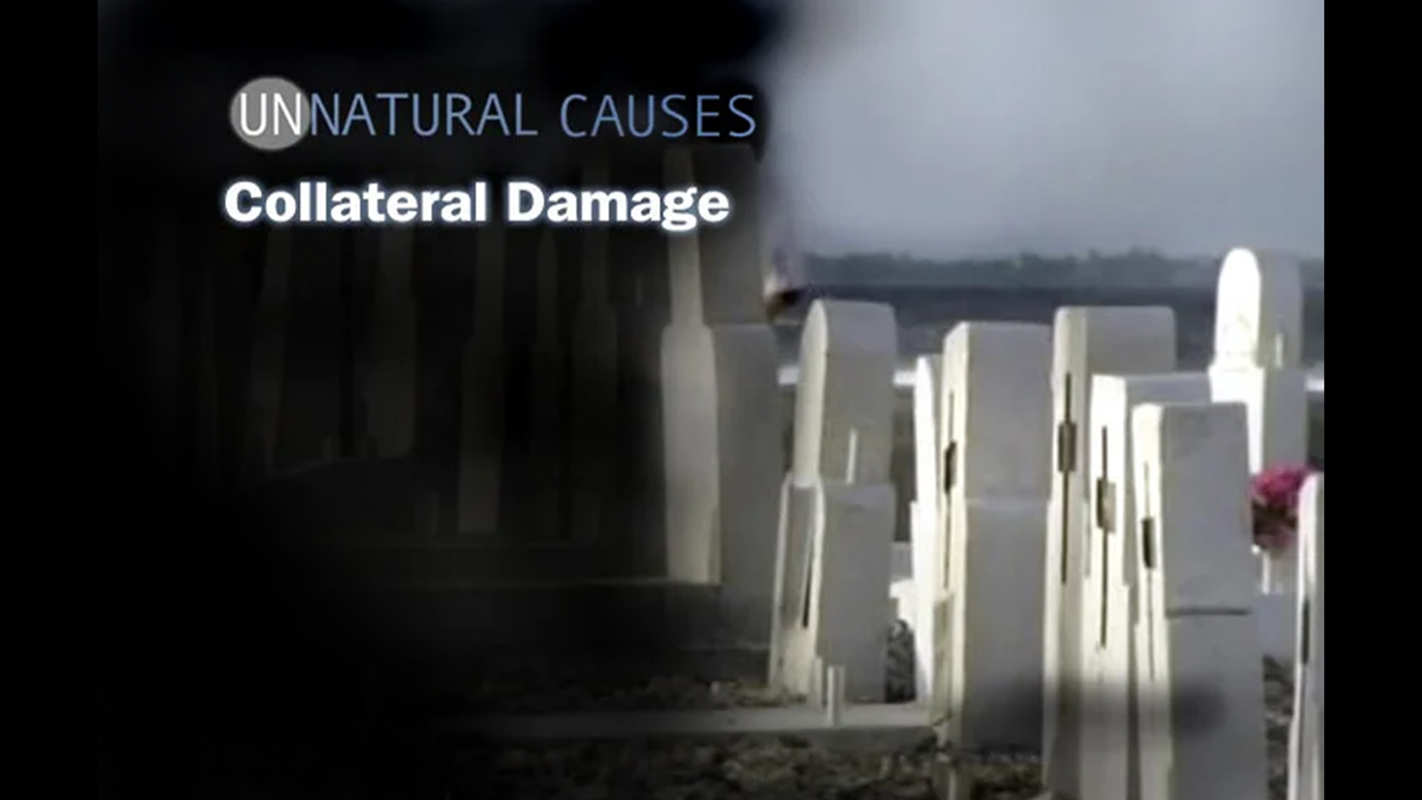
Episode 6 of the 7 part series Unnatural Causes: Is Inequality Making Us Sick?
Two billion people worldwide are infected with the TB bacillus, but only 9 million people a year actually get the disease. The story of the Marshall Islands can help us understand why.
The lives and health of Marshall Islanders in the equatorial Pacific were disrupted in a unique fashion when the United States occupied their nation and used their outer islands for extensive nuclear testing after World War II. Between 1946 and 1958, 67 atomic devices were detonated – the estimated yield equivalent to 1.7 Hiroshima blasts every day for 12 years.
After miscalculations on one of the largest explosions caused fallout to land on three inhabited islands, residents were treated, relocated, and tracked to study the effects of radiation exposure on humans. Hundreds of other Marshallese were moved off their home islands to make way for the testing and to build the Ronald Reagan Missile Testing Site on Kwajalein Island.
Their lands, culture, and traditional way of life destroyed, many Marshallese crowd the island of Ebeye hoping to get a job at the U.S. base on nearby Kwajalein. Here, they face the worst of both the “developing” and industrialized worlds. Tuberculosis and other infectious diseases are fed by poverty and squalid conditions. Lack of economic opportunities and healthy food options, combined with the stress of dislocation and cultural loss, have also led to high rates of chronic illnesses like diabetes, heart disease, hypertension, obesity and cancer.
Three miles away on Kwajalein, American contractors and their families enjoy a pleasant suburban environment. Health outcomes here are comparable to the U.S. Although more than 1,100 Marshallese work on Kwajalein, they’re not allowed to live there and must commute by ferry to and from Ebeye, where power outages and sanitation issues are a continuing problem.
As of 2008, around 10,000 Marshall Islanders, seeking a better future, have ended up in the unlikely place of Springdale, Arkansas. A special treaty allows Marshallese citizens to live and work in the U.S. freely without a visa. Drawn by plentiful jobs in the food processing industry and a low cost of living, most are happy to have better educational opportunities and healthier options.
But even though the Marshallese can leave the impoverished conditions of their homeland behind, they can’t escape the effects of having lived in poverty. They must also cope with the stress of an unfamiliar environment. Rates of tuberculosis and other infectious diseases among Marshallese living in the U.S. are far above the national average. Chronic disease rates are also high.
In the U.S. tuberculosis rates fell 70% between 1900 and 1945, even before the drug to treat the disease was invented. Better housing, sanitation and improvements in our standard of living were key.
The health problems that Marshallese people experience today are the price they’ve paid to help the U.S. maintain a strategic military presence in the Pacific. Our relationship with the Marshall Islands has shaped much of its fate over the past 60 years; it can also help improve their prospects for life and better health in the future.
Unnatural Causes: Episode 6: Collateral Damage
Episode 6 of the 7 part series Unnatural Causes: Is Inequality Making Us Sick?
Companion Website
For Discussion Guides, Action Toolkits, Policy Guides, Backgrounders, Handouts and much more visit: www.unnaturalcauses.org
Discussion Guide
Discussion Guide for Unnatural Causes: Episode 6: Collateral Damage
Transcript
Transcript for Unnatural Causes: Episode 6: Collateral Damage

Ways to Watch
Educational Streaming
Recommended for Colleges, Universities, Government Agencies, Hospitals and Corporations
Community Screening
Short-term use for small groups, organizations, or high school classes (where no admission is charged)
Home Viewing
48-hour, personal rental for in-home use only, restrictions apply