
End of the Rainbow
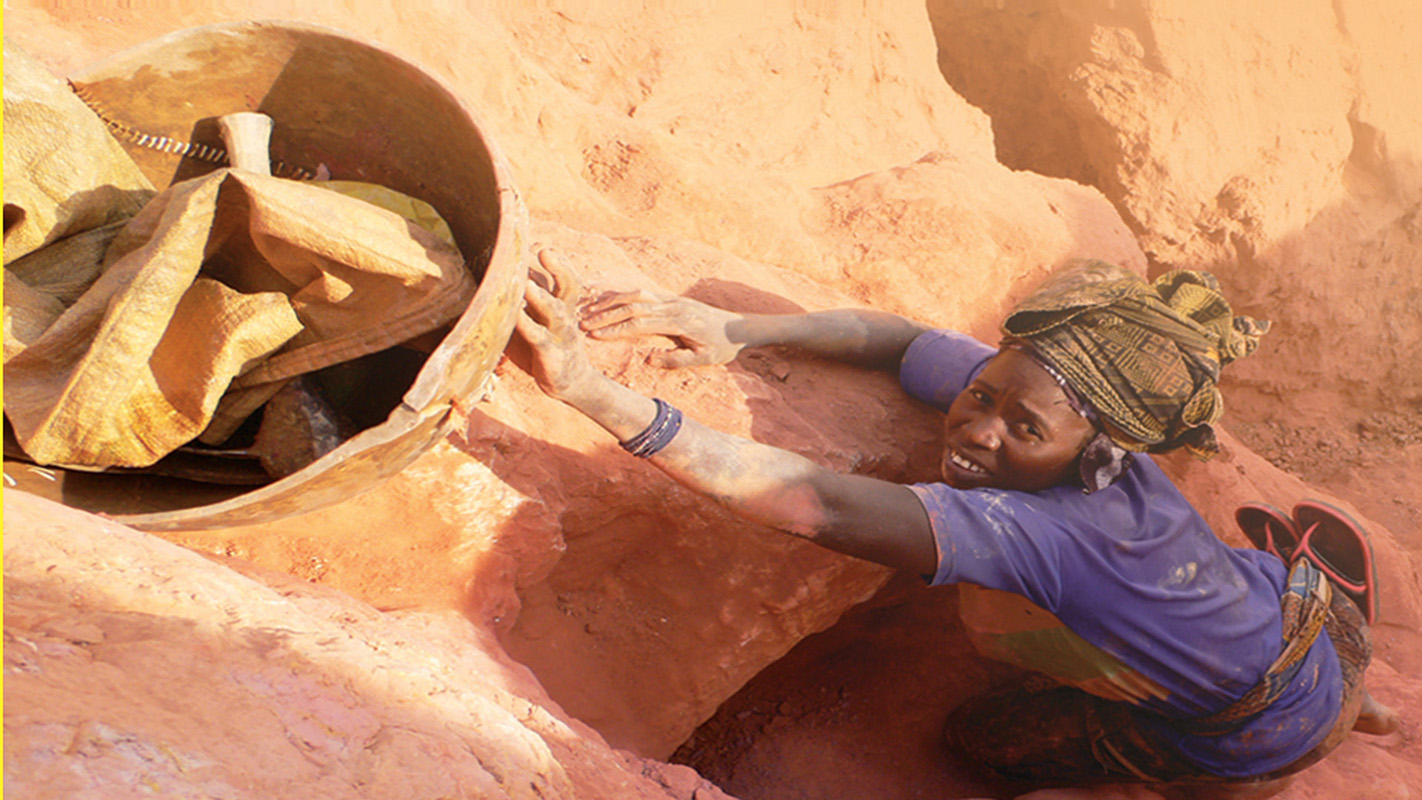
End of the Rainbow provides a concise, in-depth look at the impact of global extractive industries on local populations, their economy, their traditions and their environment. It depicts in striking details the confrontation of two cultures, one indigenous the other a unique reflection of the age of globalization. The film uses a gold mine in Guinea to explore whether concessions granted to transnational corporations are in the interest of the companies, the governing elite or the local community.
In 2005, the government of Lansana Conté, President of Guinea since 1984, sold its interest in one of the richest remaining gold fields in the world to an Anglo-Canadian combine. Guinea, a one party state often cited for its corruption, has under World Bank tutelage conducted an extensive program of privatization, foreign investment and structural adjustment policies. While the royalty arrangement between the corporation and the government remains a mystery, it is known that the local population receives only 0.4% of the profits from the mine.
The film begins with the piece-by-piece dismantling and reconstruction of a massive gold mining operation from Borneo to a site in northeastern Guinea, 450 miles from the capital Conakry, close to the Malian border. Nothing could illustrate more vividly the mobility of global capital and the contrasting technological power of industrial and pre-industrial societies.
We are guided through these two worlds by the chief of the village where the mine is located and the English chief engineer of the mine. The village had been an agrarian community where families scrapped a living from the ground with short-handled hoes. In the dry season they would earn extra income panning for grains of gold in the hope of buying livestock.
Whole villages had to be relocated and bulldozed by the government to make way for the mine, though the company compensated the farmers for their holdings, several were unwilling to leave. Some of the local men received well-paying jobs at the mine; even schoolteachers took jobs as laborers. Discos opened in the village and the miners began to adapt to an international consumer lifestyle.
The chief is wary but hopes the mine will bring prosperity to his people. He has high expectations; he believes that whites always keep their promises but he doesn't know at what price. He says Africans only used gold for its beauty whereas whites know how to use it in their machines. His people worked together in a subsistence economy based on the family and the village; now everyone is interested only in earning a wage. He accepts that he represents a passing order, "Everyone has his time."
His English counterpart and his international team of expats create an ersatz culture of their own in a fenced-off enclosure. The center of life is a whites-only pub equipped with satellite television tuned to the sports channel, copious liquor and the flags of a dozen nations. The mine manager ruefully admits that he lives only for the moment, has no home, no savings, no family and no hobby but his work. He and the other whites are full-fledged citizens of the new global economy; perhaps a harbinger of things to come.
Conflict breaks out soon as a drought brings hunger to the village. There is no way for the farmers to eke out a living except through panning or digging for gold. But now the company owns the gold fields. And they have dynamited the once tranquil landscape into a huge Dantesque mining pit fouled by poisonous, cyanide-laced water, in constant danger of cave-ins. One man recollects the trauma of hearing that his wife has "been killed by the mine," buried in a mudslide looking for illicit gold.
The mine is determined to keep the locals out, ostensibly on safety grounds. The actual enforcement of company policies is left in the hands of the Guinean army, a key condition of the concession agreement. The soldiers are shockingly abusive to their fellow citizens, as mine officials look on impassively. Violators are imprisoned under the hot sun in shipping containers. One explains: "I am here because I am poor. I cannot steal from the poor so I steal from the company." At a community meeting, the chief insists that "the poor have rights too." But he is powerless in the face of the agreement between the company and the central government. He can only conclude that "the gods who protected Africa have abandoned us."
The company is not simplistically portrayed as ruthless; it has built a school where there was none; it is even ecologically conscious enough to stockpile the topsoil to restore the farmland when it inevitably exhausts this mine and moves on to the next country. But it is there to do a job, it has been granted a concession to generate a profit, regardless of its impact on the farmers.
What will remain indelibly in viewers' memories is End of the Rainbow's keen anthropological observations of this clash of cultures: a peasant thatching his hut and the erection of the mine; a lone bicyclist next to a truck carrying a gargantuan earth mover; a traditional gold merchant with his balance and a plane full of gold ingots taking off for the world markets. Then there is the contrast between the dry, utilitarian speech of the Europeans and the idiom of the chief rich with proverbs and folk philosophy, representing two worldviews. The film does not favor one over the other; its point is that power - political, financial and technological - has already made the choice. Ironically, both the chief and mine engineer seem resigned to their fates, both caught up in a force larger than themselves.
(On the same DVD with this 52 minute film is an 83 minute feature-length version for those wanting a more extensive treatment.)
"End of the Rainbow shows the cultural fault-lines between mines and communities, but also the range of actors who help negotiate these fault-lines. It gives a good feel for many issues that could be productively elaborated in class or activist discussions."
Anthony Bebbington, Institute for Development Policy and Management, University of Manchester
"An amazing audio and visual journey into the center of contemporary social, environmental and economic conflicts surrounding gold mining in Africa."
Jeffrey Bury, University of California-Santa Cruz
"End of the Rainbow manages to capture real footage of events and situations that are globally all too common yet all too rarely caught on film! This film will be very valuable for educating about a number of impacts of and problems with industrial mining."
Scott Cardiff,
"Not only is it an important video...but it is a very important issue."
David Newbury, Smith College
End of the Rainbow
Related Titles

Ways to Watch
Educational Streaming
Recommended for Colleges, Universities, Government Agencies, Hospitals and Corporations
Community Screening
Short-term use for small groups, organizations, or high school classes (where no admission is charged)
Home Viewing
48-hour, personal rental for in-home use only, restrictions apply